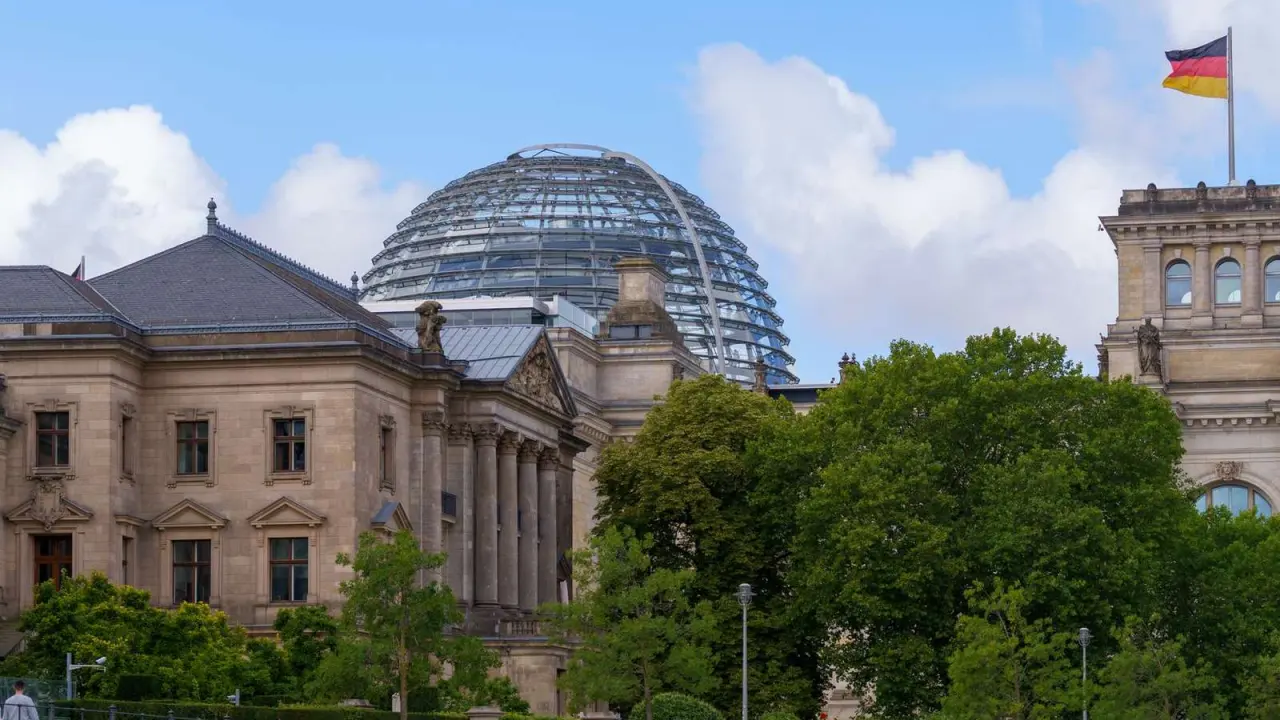
Trying to see how the Bundestag works can feel like facing a maze of bodies and procedures. Much of the real work happens in committees, which prepare bills before the full chamber votes on them.
For the wider field, start with the explainer on what is public affairs, which this guide supports.
| Item | Value |
|---|---|
| Permanent committees in the first electoral term (1949) | 40 committees |
| Permanent committees in the sixth electoral term | 17 committees |
| Votes per full committee member | One vote |
| Distribution of committee seats | Proportional to each parliamentary group’s share of plenary seats |
| Method if groups cannot agree on chair posts | Sainte-Laguë/Schepers method |
| Usual pairing with the government | Each federal ministry paired with a parliamentary committee |
These figures come from the German Bundestag’s page on the functions and responsibilities of its committees, in the version dated 15 November 2026. Parliamentary arrangements can change from one electoral term to the next, so check the source before you rely on them.
Why committees sit at the centre of the work
The Rules of Procedure of the German Bundestag describe the permanent committees as bodies responsible for preparing the decisions of the Bundestag. The Bundestag’s own page says this short definition points to the huge significance of committees for parliamentary work.
The plenary, meaning the full chamber, votes on the recommendations that committees make, generally following another debate. Committee members therefore make a decisive contribution to the substantive work of the legislative process.
This guide concentrates on committees, the part of the Bundestag’s work that its own page on the subject explains in detail.
How are committees set up in each term?
Each electoral term, the permanent committees are established anew, with new names and a different composition. The Bundestag does not have a completely free hand, because some committees are enshrined in the Basic Law and others are provided for by statute. The Petitions Committee and the Defence Committee are examples.
Most permanent committees mirror the division of responsibilities within the government. As a rule, each federal ministry is paired with a parliamentary committee, although Parliament can also give prominence to particular policy areas by setting up additional ones.
The number of committees varies between terms. According to the Bundestag’s committee page, the first term in 1949 had 40 committees, while the sixth electoral term had 17.
Who sits on a committee, and who decides?
Each committee consists of a chair, a deputy chair and a number of members, and every member has a substitute for times of absence. The number of members depends on the amount of work expected.
Seats are distributed according to the parties’ relative strengths in the plenary, so each parliamentary group receives a proportional share. The leaders of the parliamentary groups decide which of their Members sit on which committee, and they try to accommodate Members’ wishes where possible. Ideally, each Member is a full member of only one committee.
Several roles shape how a committee runs:
- Chairs prepare, convene and conduct the committee meetings.
- Group coordinators are nominated by each parliamentary group for each committee. They act as main contacts for the group leaders, help set their group’s course and mediate when conflicts arise.
- Substitutes may attend every committee meeting but vote only when standing in for an absent full member of their own group.
- Members without a group or grouping are allocated a seat by the President of the Bundestag after consultation. They may speak and table motions but have no vote.
Every full member has one vote when decisions are taken. Chair posts are negotiated between the parliamentary groups. If no agreement is found, the Sainte-Laguë/Schepers method calculates rank order numbers, and the groups then take turns choosing the chairpersonships they want.
How do committees shape a bill?
As a rule, the plenary assigns committees their work. Following the first reading, bills are referred to the relevant specialist committees in one of three roles:
- as the lead committee;
- as a committee asked to provide an opinion during deliberations;
- as a committee asked to submit an expert opinion.
The lead committee revises the bill so that the plenary can pass it at the end of the process. Its recommendation for a decision may also say that a bill is “redundant”, for instance because the provisions were adopted as part of another bill. The full route is covered in the guide on how a bill becomes law in germany.
Committees can also act on their own initiative. They may deliberate on issues within their terms of reference without a referral from the plenary, and they can obtain information about legislative projects from the ministries.
Hearings and subcommittees
Committees can hold public hearings, to which interest-group representatives and experts are invited. The Bundestag says these hearings are meant to give members additional information and as comprehensive a picture as possible of the potential impacts of a law.
Every committee can also set up subcommittees to prepare and support its work. They deal on an ongoing basis with specific aspects of the main committee’s remit and prepare its decisions on those issues.
If you want to know how policy research organisations fit into this picture, the guide on what is a think tank explains them.
Frequently asked questions
Do the Bundestag’s committees stay the same between elections?
Show answer
Not across electoral terms. According to the Bundestag’s committee page (version dated 15 November 2026), the permanent committees are established anew each term, with new names and a different composition.
Does every ministry have its own committee?
Show answer
As a rule, yes: each federal ministry is paired with a parliamentary committee. Parliament can also create additional committees to give prominence to particular policy areas.
Who can vote in a committee?
Show answer
Every full member has one vote. Substitutes vote only when deputising for an absent full member of their own group, and Members without a group or grouping have no voting rights.
Are committee hearings open to experts?
Show answer
Yes. The Bundestag’s committee page names experts among the guests at public hearings, alongside interest-group representatives.